 English
 Français
 Deutsch
 Italiano
 日本語
日本語 Español

POSITIVE COMMERCE
Making Genuine Efforts and Driving Change With Our Clients
At Vusion, we make continuous improvement in our carbon intensity performance a daily habit.

Our own business model and our ESG strategy illustrate this ever-pursuing goal, with a further reduction recorded in 2025 compared to the 2022 baseline year, as defined under our Science Based Targets initiative (SBTi)-validated commitment.
Our Company Combines Three Pillars That Position the Group as a Key Enabler of Sustainable Transformation in the Global Retail Sector:
- Best-in-class climate performance
- Scalable customer impact
- Strong social foundations
Sustainability as a Performance Driver
Vusion’s model demonstrates that sustainability is a core driver of value creation:
- Alignment with ESG ratings (EcoVadis, CDP, ISS)
- Innovation-driven growth
- Strong employee engagement

Our Commitments and Certificates

More Than Just Trendy Words: A Science-Based Decarbonization Trajectory
Vusion’s climate strategy is fully aligned with:
- Paris Agreement (1.5°C trajectory)
- SBTi-validated targets (since 2024)
- GHG Protocol (Scopes 1, 2, 3)
- TCFD-aligned transition planning
|
SBTi performance: ahead of trajectory Short-term (2030 targets vs SBTi requirements) |
|||
| Indicator | Vusion Target | SBTi Requirement | Status |
| Scope 1+2 (absolute) | -75% | -42% | Ahead |
| Scope 3 (intensity) | -59% | -52% | Ahead |
From Decarbonization Levers to Climate Resilience.
A Clear Path to Net Zero
-
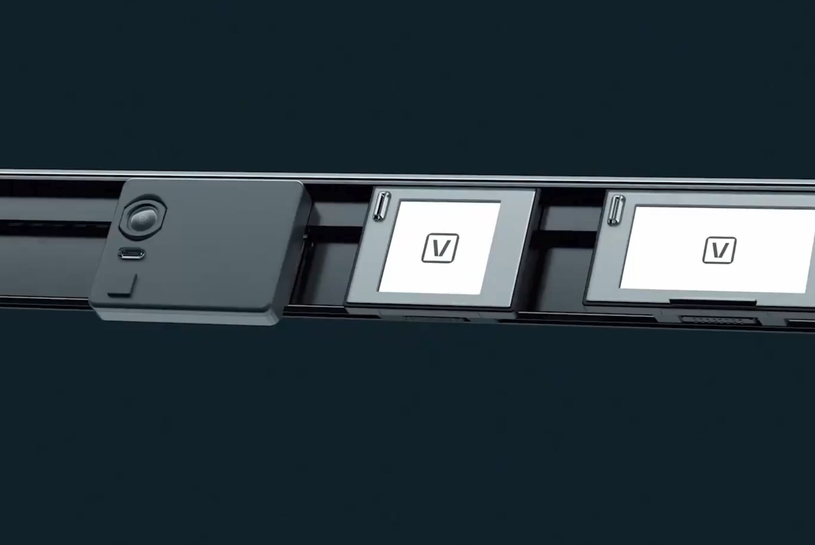
Decarbonization Model: Structural Levers
- Eco-design and energy-efficiency
- Circular economy: designed for repairability and modularity, Second-life program (up to -60% in emissions than new products)
- Supplier engagement (SBTi alignment, renewable energy)
- Shift toward software & services (lower carbon intensity model)
-

A Resilient Transition Plan
Vusion Integrates:
- Climate risk scenarios (IPCC, IEA NZE)
- Full value chain coverage (including suppliers & data centers)
- Adaptation + mitigation approach
Positive Retail: Actions Beyond Our Offices and Warehouses
Connectivity, geolocation, and data analytics positions digital technologies as a key lever for retail decarbonization. They support the development of more efficient e-commerce and omnichannel models, optimize logistics planning, enhance product traceability, and enable more precise management of the shelf life of perishable goods. This means that:
- Retail associates see improvement in their employee experience
- End customers benefit from greater transparency
- E-commerce becomes local
- Information transparency contributes to better supply chain management
- Waste reduction is facilitated
A Human-Centered Company Makes an Employer of Choice
-
Gender Equality as a Strategic Priority
- Women in management: 30%
- Women in executive committee (GMB): 32% (2025)
-
Strong Employee Engagement
- eNPS: ~32–33 (excellent level)
- High participation and structured feedback loops
- Continuous managerial dialogue (biannual surveys, performance reviews)
-
High Social Standards Across Geographies
- 100% employees paid at or above living wage
- 96% permanent contracts
- Strong social protection (health, retirement)
- Parenthood & work-life balance: a distinctive program
- Global HR standards aligned with ILO and UN principles
FAQs
-
At the end of 2020, we launched our “Customer First” program, anchored in our belief that high levels of customer satisfaction and loyalty lead to consumers becoming our greatest champions, recommending us to other potential customers. Thus, the Group is dedicated to fostering a positive experience at every key stage of the customer journey in order to set this virtuous cycle in motion. The indicator we used is the Net Promoter Score (NPS). It is a widely used tool for measuring customer loyalty and satisfaction. It involves asking customers how likely they are to recommend a product or service to others, on a scale of 0-10. Our customer satisfaction survey is deployed worldwide. It is linked to our Customer Relationship Management (CRM) system and our Power BI analysis tool. Implementing NPS across the work done by every employee will help us measure how customers perceive our service and how well our business is doing.
With an overall NPS above 67 in the first half of 2024 (compared to 65 in 2023 vs 55 in 2022) and an industry average of around 35. This positive NPS has been achieved by adopting a truly customer-centric approach.
-
To assess and ensure the sustainability of its industrial supply chain, the Group developed a supplier code of conduct, which was signed by 99.64% of its industrial purchases in 2024. Additionally, VusionGroup evaluates the quality and Sustainability aspects of its supply chain through three types of audits:
- Self-Assessment Questionnaires: completed by potential new suppliers, these questionnaires identify any major breaches of the Group’s social and environmental requirements.
- Internal Audits: conducted by the Group’s product quality teams, during regular on-site visits to our subcontractors and suppliers. These audits ensure suppliers meet quality standards and comply with the sustainable purchasing policy: In 2024, 92.80% of inustrial purchases and the group’s main indirect suppliers were audited .
- Third-Party Assessments: the Group has commissioned EcoVadis, a CSR rating company, to conduct documentary CSR assessments of its suppliers.
These measures uphold high standards of social and environmental responsibility across VusionGroup’s supply chain.
-
We don’t own the production plants that manufacture our products. We have opted for a factory-free production model, outsourcing our production processes to External Manufacturing Services (EMSs). Our main assembly partners have long-established programs in ESG and environmental initiatives. They follow global reporting standards for sustainability and are all certified to ISO International Standards that provide guidance on environmentally and socially responsible behavior for organizations. The scope of their environmental management systems extends far beyond what is typically found in an ISO 14001:2015 system and includes such elements as product environmental compliance and e-waste management. We subcontract the manufacturing of ESLs to specialized service providers (EMS-Electronics Manufacturing Services), while retaining the design and intellectual property rights of our products. Most of our EMS partners are located in mainland China or Southeast Asia, or more recently in Central America (Mexico). The Group assesses the quality of its supply chain through three types of audits:
- An audit of our suppliers managed by the Group’s product quality department, during visits organized to our subcontractors and suppliers.
- Supplier self-assessment questionnaire to be completed by suppliers: in order to identify any major breach of the Group’s social and environmental requirements, a self-assessment questionnaire was designed by the Product Quality Department and the Group’s purchasing teams and is systematically submitted to current and potential suppliers.
- The Group entrusted a third party (the ESG rating company EcoVadis) with the performance of ESG documentary assessments. They measure the performance of VusionGroup’s main suppliers on 21 ESG criteria grouped into four themes: Environment, Labor & Human Rights, Ethics, and Responsible Procurement.
-
Within our organization, our Code of Ethics is designed to make sure that each staff member — no matter what position they hold — knows, understands, and acts with the highest ethical standards in every aspect of our work. While the Code cannot cover every workplace challenge, it helps us to spot issues, become more familiar with our policies and act with integrity. Everyone at VusionGroup must apply the Code along with the procedures and related policies. This is what we expect when we work together, interact with customers, address shareholders, collaborate with business partners, and contribute to our communities.
Following the communication and training on business ethics, the Group has set itself a clear objective since 2021: to ensure that each employee signs the Company’s Code of Ethics, so that our values and fundamental principles are as widely shared and understood as possible, with signature campaigns being organized during the first quarter of each year. This Code of Ethics has been strengthened by the implementation of three new procedures:
- the gift and hospitality procedure;
- the conflict of interest procedure; and
- the ethical alert procedure (available on our internal “Service Now” platform, to ensure both confidentiality and fluidity of flows).
-
Anytime, anywhere, consumers have the right to obtain complete information about the products they purchase and consume. They also have the right to know that their personal data is protected and cannot be used for purposes other than to provide them with full purchasing satisfaction. It is essential to maintain strict confidentiality of data. In this sense, the customer applications that we develop or activate place this imperative at the forefront. Our applications are based on the following assumptions:
- Consumers expect personalized service, recommendations and offers. As a result, they are ready to be identified and provide data on their preferred choices; and
- For retailers, personalized marketing in-store can unlock significant value. We thus promote solutions and operate under two guiding principles:
- The deal must be fair. Retailers must earn the right to know their customers and to use the data in exchange for a better and more personalized service, better value for money, time savings, and real value; and
- The services are always subject to the shopper’s willingness to sign up for a clear and transparent deal, without surprises. As stores bridge over to digital technology, the actions of retailers regarding privacy must be fully transparent. Smart labels are the perfect GDPR-compliant tool as they are an opt-in-only gateway to digital content and services.
