.png)

What is Assortment Optimization? And why it fails without Accurate Store Data
Retailers are under increasing pressure to make every square foot, every SKU, and every decision count. Yet many still rely on outdated assortment strategies that fail to reflect what actually happens in-store.
Assortment optimization is no longer just about selecting products. It is about aligning strategy, execution, and demand signals across every store. Without this alignment, even the most advanced assortment plans remain theoretical.
And the cost of getting it wrong is significant. Optimized assortments can drive between 2% and 5% sales growth and improve margins by up to 10%[1]. Yet many retailers fail to capture this value due to a lack of real-time, store-level visibility.
Talk to a retail expert and assess your current assortment strategy
Key Takeaways
- Assortment optimization is a multi-layered process spanning strategy, execution, and in-store reality
- Traditional approaches fail because they rely on static, centralized data
- AI-powered assortment optimization enables continuous, data-driven decision-making
- Store data is the missing link between planning and execution
- Retailers who connect data to in-store actions unlock measurable gains in revenue, margins, and availability
What is Assortment Optimization?
Assortment optimization is the process of selecting, structuring, and choosing the product mix offered in each store to maximize business performance and meet customer demand.
At its core, it answers a simple but critical question: Are you offering the right products, in the right place, at the right time?
In practice, this goes far beyond basic assortment planning. Traditional approaches rely on historical sales data and periodic reviews. Assortment optimization, by contrast, is data-informed. It integrates multiple data sources such as sales performance, customer trends, inventory levels, and increasingly, in-store signals.
This shift is essential. Consumer expectations are evolving rapidly, and 81% of shoppers now expect more relevant shopping experiences [2]. A one-size-fits-all assortment is no longer viable.
At the same time, the complexity retailers face is exploding. The volume of data generated across retail operations is expected to reach 394 zettabytes by 2028 [3]. Yet without the right tools, this data remains underutilized.
This is where assortment optimization becomes a strategic capability. It transforms raw data into actionable decisions, enabling retailers to:
- Align product selection with local demand
- Improve product availability on shelf
- Reduce excess inventory and waste
- Increase category performance at scale
The 3 Layers of Assortment Optimization
Assortment optimization operates across three interconnected layers, each with its own role and challenges. Most retailers focus on the first layer. The gap happens in the other two.
Strategic layer: what to sell
The strategic layer defines the overall product assortment at a macro level. It answers questions such as:
- Which categories and products should be included
- How to position private label vs. national brands
- What role each category plays in the overall strategy
This layer is typically driven by historical data, market trends, and category performance. It is where long-term decisions are made, often at headquarters level.
However, relying only on historical data is no longer sufficient. Customer preferences evolve quickly, and static strategies struggle to keep pace with demand variability.
Tactical layer: where and how to sell
The tactical layer translates strategy into actionable plans across stores and formats. It includes:
- Store clustering and localization
- Planogram design
- Product placement and merchandising rules
This is where assortment becomes more granular. Retailers aim to adapt product mixes based on store size, location, and customer demographics.
Yet, many decisions at this level are still based on assumptions rather than real in-store insights. As a result, assortments may look relevant on paper but fail to reflect actual store conditions.
Operational layer: what actually happens in-store
The operational layer is where assortment optimization succeeds or fails. It reflects the reality on the shelf:
- Are products available when customers need them?
- Are planograms executed correctly?
- Are promotions visible and aligned with strategy?
This is also where most blind spots exist. Inconsistent execution, stockouts, and misplaced products create a gap between planned assortment and actual availability.
In fact, poor visibility into in-store execution directly impacts performance, with issues like out-of-stocks and misalignment reducing sales opportunities and increasing operational inefficiencies .
Without up-to-date store data, retailers operate with a partial view of reality. And when the operational layer is disconnected, even the most advanced strategic and tactical decisions cannot deliver expected results.
The Business Impact of Getting Assortment Optimization Right
Getting assortment optimization right is a direct lever on revenue, margins, and operational efficiency. In a context where retailers face rising costs and increasing competition, the impact is immediate and measurable.
Revenue uplift and margin improvement
When assortments are aligned with actual demand, every product earns its place on the shelf. Retailers can eliminate low-performing SKUs and prioritize high-impact items.
The result is tangible. Optimized assortments can increase sales by 2% to 5% and improve margins by up to 10%[3].
Beyond these gains, better assortment decisions also improve promotional efficiency. Many retailers still struggle with ineffective promotions, with up to 25% failing to deliver expected results . A more precise product mix directly increases promotional impact.
Reduced stockouts and waste
Poor assortment decisions often lead to two costly issues: stockouts and overstock.
On one side, missing products result in lost sales and frustrated customers. On the other, excess inventory ties up capital and increases markdowns or waste, especially in categories with limited shelf life.
Assortment optimization addresses both by aligning supply with demand.. Combined with better inventory visibility, it enables retailers to:
- Anticipate demand more accurately
- Reduce unsold inventory
- Improve on-shelf availability
This balance is critical for maintaining customer satisfaction.
Better customer experience
Assortment is one of the most visible expressions of a retailer’s value proposition. When customers cannot find the products they expect, trust erodes quickly.
Conversely, a well-optimized assortment improves the entire shopping experience:
- Products are relevant to local demand
- Availability is consistent
- Navigation becomes easier and more intuitive
This is especially important as customer expectations evolve. With 81% of consumers expecting personalized experiences (Source: Shep Hyken: https://hyken.com), retailers must move beyond generic assortments.
Delivering the right product mix at store level is no longer optional. It is a baseline requirement to remain competitive.
How AI-Powered Assortment Optimization Works
Traditional assortment decisions rely on periodic analysis. AI-powered assortment optimization shifts this to an ongoing, data-driven process that adapts to real-world conditions accurately..
Data inputs: sales, behavior, in-store signals
AI models rely on a wide range of data sources to build a complete view of demand:
- Historical and current sales data
- Customer behavior across channels
- Inventory and supply chain data
- In-store signals such as shelf availability
The key shift is the integration of store-level data, which reflects what is actually happening on the shelf. Without it, decisions remain disconnected from execution.
Machine learning and predictive models
Machine learning models analyze these data sets to identify patterns and predict future demand. This allows retailers to move from reactive to proactive decision-making.
Instead of asking “What sold yesterday?”, retailers can answer:
- What will sell tomorrow
- Where demand will increase or decline
- Which products should be added, removed, or repositioned
This is why investment in AI continues to accelerate, with spending expected to exceed $632 billion by 2028 (Source: IDC).
These models also enable more granular decisions, such as tailoring assortments at the store or cluster level rather than applying a uniform strategy.
Continuous optimization and automation
AI-powered assortment optimization is not a one-time process. It continuously learns and updates recommendations based on new data.
This enables:
- Optimized adjustment of assortments
- More accurate reaction to demand shifts
- Key decision support for category managers and store teams
Instead of static planning cycles, retailers operate in a loop of analyze → recommend → execute → measure → adjust.
Real-World Examples: From Guesswork to Precision
AI-driven assortment optimization is already transforming how retailers operate across categories.
- Grocery retail: assortments are adapted store by store based on local demand patterns, improving availability and reducing waste
- Fashion retail: predictive models help balance inventory, reducing both overstock and stockouts
- Local optimization: retailers align product selection with real demand signals, rather than relying on assumptions or historical averages
This shift marks the end of intuition-based assortment decisions. Retailers who leverage AI gain precision, speed, and scalability across their entire network.
The Shift to Real-Time, Store-Level Optimization
Assortment optimization is undergoing a fundamental shift. Moving from periodic, centralized planning to data-informed store-level execution is the only way to keep pace with demand volatility and operational complexity.
What is assortment optimization?
Assortment optimization refers to the ability to accurately adjust product selection based on data from stores, and operations.
Instead of relying on weekly or monthly updates, retailers can:
- Detect demand changes
- Adjust assortments accurately at store level
- Better align inventory, merchandising, and product availability
This transforms assortment from a static plan into a living system, constantly adapting to actual conditions.
Why store-level data changes everything
The biggest limitation of traditional assortment optimization is the lack of visibility into what happens in-store.
Without store-level data, retailers cannot answer critical questions:
- Are products actually available on shelf?
- Are planograms executed as intended?
- Are promotions visible to customers?
This blind spot creates a disconnect between strategy and execution.
Store-level data closes this gap. By capturing real-time signals from the shelf, retailers gain:
- Accurate visibility into product availability
- Immediate detection of execution issues
- A reliable foundation for AI-driven decisions
This is where most value is unlocked. Because what matters is not what was planned, but what is actually available to the customer.
From global strategy to local execution
Retail has traditionally been managed from the top down. Assortments are defined centrally and deployed uniformly across stores.
This model no longer holds.
Demand is local. Store conditions vary. Customer expectations differ from one location to another.
Assortment optimization enables retailers to bridge this gap:
- Maintain a global strategy
- Adapt execution locally
- Continuously align both through data
The result is a more responsive, more accurate, and more scalable operating model.
Retailers who fail to make this shift risk operating on outdated assumptions, while more advanced players act on data-driven insights.
Enabling Assortment Optimization with Store Data
Assortment optimization depends on one critical capability: capturing and activating accurate store-level data. Without it, even the most advanced analytics remain disconnected from execution.
Store execution visibility
To optimize assortments effectively, retailers must first capture what is happening on the shelf in real time.
This includes:
- Product availability and out-of-stock detection
- Shelf conditions and planogram compliance
- Promotion visibility and execution
Traditionally, this data has been collected manually, making it incomplete, delayed, and unreliable. As a result, decisions are often based on assumptions rather than actual store conditions.
Digital technologies now provide automated visibility into store-level product and shelf conditions. This creates a continuously updated view of execution, reducing blind spots and enabling more accurate responses.
ESL, IoT and computer vision
Technologies such as electronic shelf labels (ESL), IoT sensors, and computer vision are transforming how retailers capture and use store data.
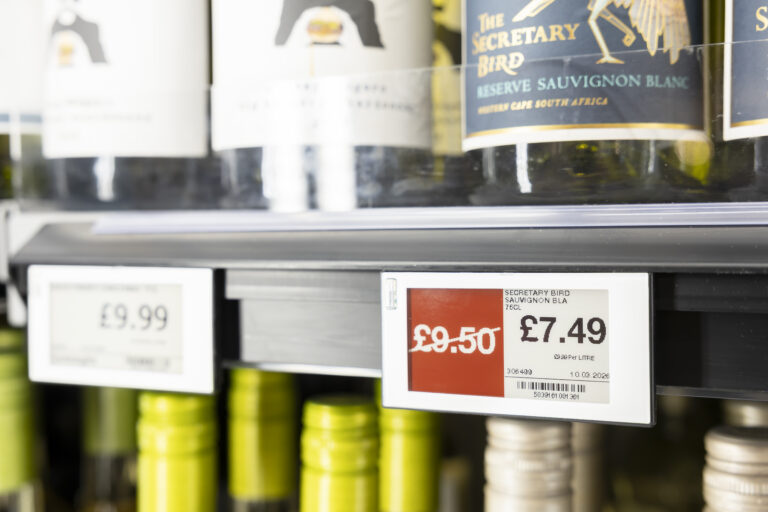
- ESL ensure that product information, and promotions are always aligned with central systems, while enabling accurate updates at scale
- IoT devices connect shelves, products, and systems to provide accurate data flows
- Computer vision delivers precise insights into shelf availability, product placement, and execution gaps
Together, these technologies create a connected store environment where data is captured automatically and accurately.
This is already critical at scale, with hundreds of millions of connected retail devices deployed globally to support store operations and data collection.
Turning insights into immediate action
Ongoing assortment optimization requires the ability to translate insights into timely actions:
- Triggering replenishment when a product is missing
- Adjusting assortments based on local demand signals
- Correcting execution issues at shelf level
This closes the loop between analysis and execution.
Instead of identifying issues days or weeks later, retailers can act faster. This shift reduces lost sales, improves availability, and ensures that assortment strategies are actually reflected in-store.
How Vusion Enables Assortment Optimization
Assortment optimization requires more than analytics. It requires a system that connects data, decision-making, and in-store execution seamlessly.
This is where Vusion bridges the gap.
Connecting store data, AI and execution
Vusion enables retailers to unify all critical data sources into a single operational framework:
- Accurate store data from shelves and operations
- Centralized assortment and merchandising strategies
- AI-powered insights for decision-making
By combining these elements, retailers gain a continuous, end-to-end view of assortment performance, from HQ decisions to shelf-level reality.
This unified approach is essential to move from fragmented data to actionable intelligence at scale.
From insights to shelf-level actions
The real value of assortment optimization lies in execution.
Vusion solutions allow retailers to translate insights into impactful, in-store actions:
- Automatically align product information and promotions at shelf level
- Detect and correct availability issues in real time
- Guide store teams with prioritized, data-driven tasks
This ensures that assortment decisions are not only made, but actually implemented where it matters most: in front of the customer.
See how connected stores turn insights into action at shelf level
Scaling assortment optimization across networks
Scaling assortment optimization across hundreds or thousands of stores is a major challenge.
Vusion enables this by:
- Standardizing data across the entire network
- Enabling timely collaboration between HQ, stores, and suppliers
- Ensuring consistent execution while allowing local adaptation
With this approach, retailers can move from isolated optimizations to a fully scalable operating model, where every store benefits from continuous, data-driven improvement.
This section addresses the most common questions decision-makers have when evaluating assortment optimization strategies.
Assortment optimization in retail is the process of selecting and consistently adjusting the product mix offered in each store to maximize sales, margins, and customer satisfaction.
It combines data analysis, demand forecasting, and in-store execution to ensure that each location carries the most relevant products based on local demand and business objectives.
AI is used to analyze large volumes of data, identify patterns, and predict future demand.
In assortment optimization, machine learning models help retailers:
- Forecast demand at a granular level
- Identify underperforming or missing products
- Recommend assortment adjustments by store or cluster
This enables faster, more accurate decisions compared to traditional, manual approaches.
Assortment planning is typically a periodic, static process based on historical data and predefined rules.
Assortment optimization is continuous.. It integrates real-time data, including in-store signals, to adjust assortments based on actual performance and evolving demand.
In short:
- Planning defines the initial strategy
- Optimization improves it
Store-level data provides visibility into what is actually happening on the shelf.
Without it, retailers rely on assumptions and incomplete data. With it, they can:
- Detect out-of-stocks in real time
- Verify execution of assortment decisions
- Align product availability with demand
This data is the missing link between strategy and execution. It ensures that assortment optimization delivers measurable results in-store, not just on paper.