Summary:
The year 2025 marked a turning point in retail, shifting from digital experimentation to real-time, shelf-level execution where technology delivers measurable business impact. Retail leaders learned that the value of omnichannel and AI-driven tools is realized only when insights are embedded directly into store workflows and execution, especially at the shelf where shoppers make purchase decisions. As retailers prepare for 2026, the focus is on unified platforms that connect merchandising, inventory, and customer engagement — enabling consistent omnichannel execution, real-time corrective actions, and improved operational performance.
Retail Trends 2025: Strategic Lessons from Digital Merchandising and In-Store Innovation
The year 2025 marked an inflection point for in-store digitization. Retailers large and small accelerated their push to blend physical and digital touchpoints, aiming to deliver the precision of ecommerce analytics to the physical shelf. From image recognition and smart cameras to agile pricing and interactive displays, the retail floor became a proving ground for data-driven merchandising. This 2025 year in review looks at what truly worked, what stalled at execution level, and what retail leaders must prioritize now to prepare for 2026.
At the same time, omnichannel retail trends exposed a critical reality: strategy alone is no longer enough. While AI-driven unified commerce platforms enable more personalized experiences and real-time merchandising optimization, value is only created when insights translate into consistent execution in stores.
Retail Trends 2025 Confirm a Shift from Digital Strategy to Store Execution
Retail trends 2025 clearly showed that in-store digitization is no longer about deploying new tools, but about closing the gap between strategy and execution. Retailers continued to invest heavily in digital retail trends designed to connect physical and digital touchpoints, with the ambition of replicating eCommerce-level precision in stores. However, 2025 made one thing explicit: value is created only when these technologies operate at shelf level, in real time, and at scale.
Why omnichannel retail trends now rise or fail at shelf level
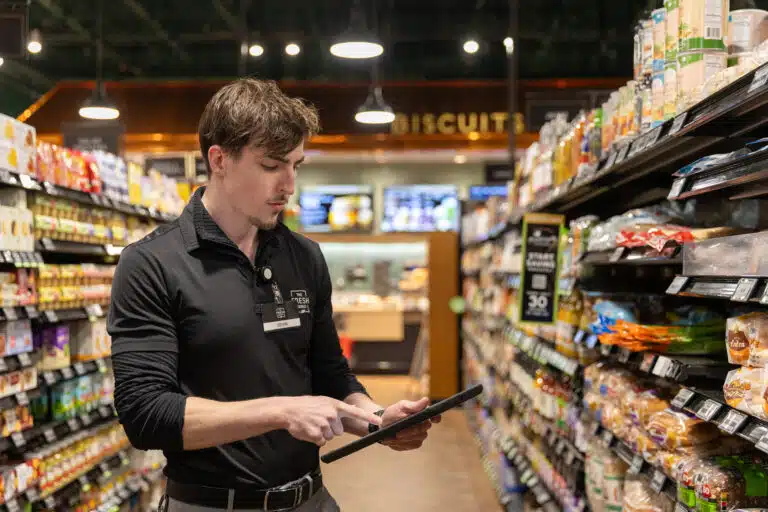
Omnichannel retail trends have matured, but the shelf remains their point of truth. Image recognition, smart cameras, and interactive displays transformed the retail floor into a live operational environment, where merchandising decisions could be observed, measured, and adjusted continuously. This shift turned stores into active contributors to performance rather than passive execution points. According to the National Retail Federation, the majority of purchasing decisions are still made in physical stores, reinforcing the strategic importance of flawless shelf execution.
The execution gap between HQ strategy and in-store reality
Despite stronger analytics and unified commerce platforms, many retailers struggled to translate insights into consistent action across their store networks. In 2025, this execution gap emerged as one of the most critical risks for leadership teams. McKinsey highlights that retailers able to connect real-time data with store-level execution outperform peers on both profitability and operational efficiency (Source: McKinsey). The lesson from retail trends 2025 is clear: omnichannel success depends less on strategic intent and more on the ability to operationalize decisions where shoppers actually engage – with products, prices, and information – at the shelf.
Digital Retail Trends That Redefined In-Store Merchandising in 2025
Digital retail trends in 2025 moved decisively from experimentation to operational reality. Technologies that were previously piloted in limited store sets became central to merchandising execution, reshaping how retailers monitor shelves, manage availability, and respond to real-time conditions. This shift redefined in-store merchandising as a continuous, data-driven process rather than a static plan.
Image recognition and computer vision become operational standards
One of the most notable breakthroughs in 2025 came from image recognition technologies. Advanced camera systems and edge AI now capture shelf conditions in near real time, detecting planogram compliance, missing facings, and promotional execution with unprecedented accuracy. Retail execution teams reported significant gains in speed and reliability, allowing them to correct inventory gaps before they disrupted sales. The image recognition market in retail reached an estimated $3.5 billion in 2025 and is projected to grow to $28 billion by 2035, reflecting how quickly this technology is becoming an operational standard rather than an innovation outlier (Source: Statista).
From data collection to real-time corrective action in stores
In grocery and convenience formats, image recognition systems also delivered shopper heatmapping insights, revealing when and where engagement peaks throughout the day and which categories generate the longest dwell times. This information proved critical for optimizing product placement, promotional visibility, and staffing decisions. The key shift observed in retail trends 2025 was not the availability of data, but its ability to trigger immediate corrective action in stores, reducing execution delays and preventing lost sales (Source: IDC).
What 2025 revealed about scalability and ROI of AI in retail
In 2025, the scalability and ROI of AI in retail became clearer as computer vision moved beyond pilots into daily operations. When paired with IoT sensors and predictive analytics, computer vision helped retailers reduce out-of-stocks while limiting overstocks, directly impacting working capital and service levels. Scanwatch reports that real-time inventory tracking and automated reordering now achieve up to 99.9% accuracy in stock level monitoring. Retailers leveraging integrated digital shelf tracking also reported improved on-hand accuracy, enabling leaner inventory investments without compromising availability. These results confirmed a key lesson from retail trends 2025: AI delivers value at scale when it is embedded into execution workflows, not when it remains confined to analytics dashboards.
Omnichannel Retail Trends Expose the Limits of Channel-Centric Thinking
While retailers invested heavily to align digital and physical channels, many shoppers still encountered friction in stores. The core issue was not technology availability, but the lack of real-time consistency across inventory, pricing information, and shelf execution.
Why shoppers still experience friction despite omnichannel investments
Despite progress in digital integration, shopper expectations continue to outpace execution. In 2025, 84% of shoppers expected a seamless experience across digital and in-store channels, yet only 29% believed retailers actually deliver at that level (Source: Salesforce). These gaps surfaced most clearly in-store, where inconsistent information, unavailable products, or disconnected promotions undermined omnichannel promises.
Inventory accuracy and information consistency as the new omnichannel KPIs
Inventory optimization became a central omnichannel priority in 2025. Automation played a larger role as machine vision, IoT sensors, and predictive analytics helped retailers reduce both out-of-stocks and overstocks. Retailers using integrated digital shelf tracking also reported improved on-hand accuracy, enabling leaner inventory investment without negatively impacting service levels. These results repositioned inventory accuracy and shelf-level data reliability as core omnichannel performance indicators.
The shelf as the last and most critical omnichannel touchpoint
2025 reinforced a strategic truth: omnichannel success is ultimately decided at the shelf. Digital journeys, mobile apps, and online baskets all converge in the physical aisle, where shoppers expect accurate information, product availability, and contextual guidance. When shelf data is disconnected from digital systems, omnichannel strategies stall.
Digital Merchandising Matures into a Store-Level Orchestration Layer
In 2025, digital merchandising clearly moved beyond isolated use cases to become a coordination layer across merchandising, inventory, and shopper engagement. What was once limited to pricing or product information evolved into a broader system capable of aligning decisions made at HQ with real-time conditions in stores. This shift marked a turning point in how retailers operationalize digital retail trends at scale.
Electronic shelf labels evolve beyond pricing into execution enablers
Electronic shelf labels evolved from simple price tags into powerful digital merchandising platforms. With tighter integration to central inventory and pricing systems, ESLs became a critical bridge between eCommerce and the store aisle. Retailers used them not only to update information faster, but also to operationalize merchandising decisions in real time, reducing execution delays and minimizing pricing and promotion discrepancies between channels.
Using digital shelf content to drive engagement and operational alignment
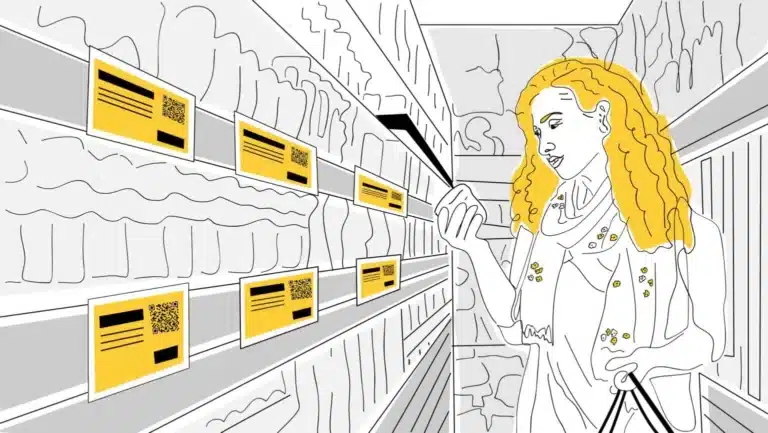
Advanced retailers expanded the role of digital shelf content through QR codes, nutrition callouts, and cross-promotion animations. These micro-messages encouraged impulse purchases while improving product understanding and brand engagement. At the same time, they helped align merchandising intent with in-store reality by ensuring that the right message appeared at the right moment, directly at the shelf.
Connecting merchandising, inventory, and shopper interaction in real time
By 2025, the most effective digital merchandising strategies connected shelf content with inventory signals and shopper behavior. Integrated digital shelf tracking improved on-hand accuracy and supported leaner inventory investments without compromising availability. This real-time synchronization transformed the shelf into an execution interface, one that simultaneously supports merchandising performance, operational efficiency, and omnichannel consistency.
What Retail Leaders Learned in 2025 About Technology and Human Execution
In 2025, retail leaders converged around three decisive lessons:
- First, digital retail trends only deliver value when they reduce friction for store teams at execution level.
- Second, automation proves effective when it absorbs labor pressure rather than replacing human interaction.
- Third, sustainable performance comes from aligning data, processes, and people across the store network.
Preparing for 2026: Strategic Priorities Shaping the Next Retail Cycle
As digital merchandising continues to evolve, 2026 is poised to bring tighter synchronization across channels, blurring the lines between the online basket and in-store browsing, with every interaction measurable, adaptable, and, most importantly, meaningful. Retailers have an extraordinary opportunity to build on this year’s digital momentum.
Moving from fragmented tools to unified retail platforms
In 2025, many retailers reached the limits of fragmented technology stacks. Isolated tools slowed decision-making and diluted accountability at store level. Preparing for 2026 means consolidating capabilities into unified platforms that connect merchandising, inventory, and operations, ensuring that strategic decisions translate into consistent execution across every store.
Making real-time data actionable across the store network
Data volume is no longer the challenge. Retailers now need systems that convert real-time signals into clear, prioritized actions for store teams. The most effective organizations entering 2026 are those that embed intelligence directly into workflows, enabling faster responses to shelf gaps, inventory imbalances, and merchandising deviations.
Turning digital retail trends into measurable business impact
The final priority for 2026 is measurement. Retail leaders increasingly expect digital investments to deliver visible impact on availability, productivity, and shopper engagement. Retail trends 2025 showed that when execution is aligned with data and processes, digital initiatives move from experimentation to performance drivers that support profitability and long-term resilience
Those who align digital upgrades with human-first store experiences will be best positioned to thrive in 2026’s new retail landscape. Don’t wait – start charting your innovation roadmap today.
How VusionGroup Supports Retailers Turning 2025 Lessons into 2026 Performance
VusionGroup supports retailers by connecting real-time shelf data with actionable workflows in stores. By combining digital shelf technologies, computer vision, and centralized intelligence, retailers gain continuous visibility into execution gaps and can prioritize corrective actions where they matter most.
As omnichannel retail trends continue to evolve, alignment across merchandising, inventory, and shopper engagement becomes critical. VusionGroup enables this alignment by orchestrating data flows and execution processes through a unified platform, ensuring that shelf information remains accurate, consistent, and responsive to real-time conditions.
In 2025, retailers discovered that digital strategies must translate into consistent execution at the store shelf to drive real value, not just analytics. Technologies like image recognition and real-time tracking moved beyond pilots to daily operations, reshaping merchandising and reducing out-of-stocks.
The physical shelf remains the ultimate point of truth for omnichannel success — where shopper decisions happen and performance is measured. If digital insights do not connect with shelf actions, omnichannel promises fall short.
AI-enabled computer vision, IoT sensors, and cloud platforms now support automated inventory insights, real-time corrective actions, and predictive forecasting, enabling retailers to reduce execution gaps and improve on-shelf availability.
Leading retailers are consolidating fragmented tech stacks into unified platforms that connect merchandising, inventory, and customer engagement, turning real-time data into prioritized actions that improve operational efficiency and shopper satisfaction.
Omnichannel strategies succeed when they deliver consistent, synchronized experiences across channels — especially when digital inventory, pricing, and promotions align with in-store execution in real time.
Merely collecting data is no longer enough; retailers must use real-time, actionable intelligence to guide store teams, reduce execution delays, and prevent lost sales, supporting sustainable performance and growth.