Holiday Marketing Strategies 2025: Smarter Assortment and Inventory Starts at the Shelf
The holiday shopping season concentrates revenue potential and marketing execution pressure into a tight window. To stay competitive, retailers must align product assortment, inventory, and personalized retail marketing campaigns with real-time demand signals. Electronic shelf labels, AI, and IoT bring the speed, accuracy, and automation needed to turn shelf execution into a high-impact holiday marketing strategy.
Holiday Retail Strategy: Shelf-Level Precision Drives Early Sales
Success during the holiday season depends on more than inventory depth: it requires real-time shelf-level precision, campaign readiness, and fast product updates. With customer expectations at an all-time high, retailers must ensure product availability, personalized promotions, and agile execution, store by store.
Assortment Accuracy: A Key Driver of Holiday Campaign Performance
The holiday season is a high-stakes sales period where every product, promotion, and campaign must convert. Success depends on precise product assortment, inventory accuracy, and retail marketing execution aligned with holiday shopping behaviors. As foot traffic rises and holiday shopping becomes increasingly omnichannel, retailers equipped with electronic shelf labels (ESLs), AI analytics, and IoT gain a measurable edge in campaign agility and customer experience.
Inventory Gaps Cost More During Peak Weeks
Smarter Assortment Starts at the Shelf
Retailers are transforming assortment strategies by integrating electronic shelf labels and connected displays. These technologies enable real-time pricing updates, instant promotional rollouts, and tailored product selection based on customer behavior in each store. For grocery and general merchandise retailers, this agility helps prevent stockouts and overstocks during early season surges.
AI-powered recommendation engines and shelf-level image recognition tools are also reshaping how retailers respond to shopper behavior. Smart cameras, like Captana, track SKU engagement, dwell time, and shopper behavior to optimize campaigns and shelf-level product visibility. These insights help category managers rebalance facings and reposition promotions mid-season.
Holiday Retail Marketing: Activate Campaigns Directly at the Shelf
Shelf-level execution now defines the success of holiday campaigns. Retailers must align pricing, promotions, and product visibility in real time to influence purchasing decisions when and where they happen.
Real-Time Adjustments to Meet Local Demand
Inventory Precision with AI and IoT
Inventory missteps during peak season can erode margins. IoT sensors embedded in shelves, coolers, and pallets provide real-time visibility into stock levels. When paired with AI forecasting that factors in local demographics, and events, retailers gain predictive insights that align replenishment with actual foot traffic and sales velocity.
From Planogram to Promotion—Instantly
By integrating ESLs with IoT signals, retailers automate shelf replenishment alerts and reorder triggers. This eliminates manual audits and frees store teams to focus on customer service and merchandising creativity.
How ESLs Help Prevent Stockouts and Overstocks
Electronic shelf labels sync directly with inventory and sales data to reflect real-time availability. When combined with planogram logic and forecast inputs, ESLs help identify underperforming SKUs, trigger restocking tasks, and rebalance facing space. This alignment reduces the risk of missed sales from stockouts and limits excess inventory that strains margins during peak season.
Holiday Ecommerce Strategy Requires Real-Time Execution
Ecommerce growth has raised the bar for in-store precision. To compete, physical stores need connected systems that translate digital speed and accuracy into shelf-level execution—especially during holiday peaks.
Shelf-Level Sensors and Forecasting Engines
IoT shelf sensors capture real-time inventory movement across the store network, enabling demand forecasting for each product, customer segment, and key holiday gift category. Combined with AI, these systems integrate local trends, calendar events, and foot traffic to anticipate product needs by store, category, and time of year. This gives retailers the foresight to plan inventory dynamically, serve customers more accurately, and deliver the best possible product availability during the busiest time of the year.
Automating Replenishment Without Losing Control
Connected shelves instantly trigger replenishment actions, keeping high-demand gift items and seasonal bestsellers in stock throughout the campaign cycle. These real-time alerts reduce reliance on manual checks and eliminate restocking delays. By aligning automation with store-specific merchandising strategies, retailers maintain brand consistency while scaling business operations efficiently.
Freeing Store Teams for What Matters Most
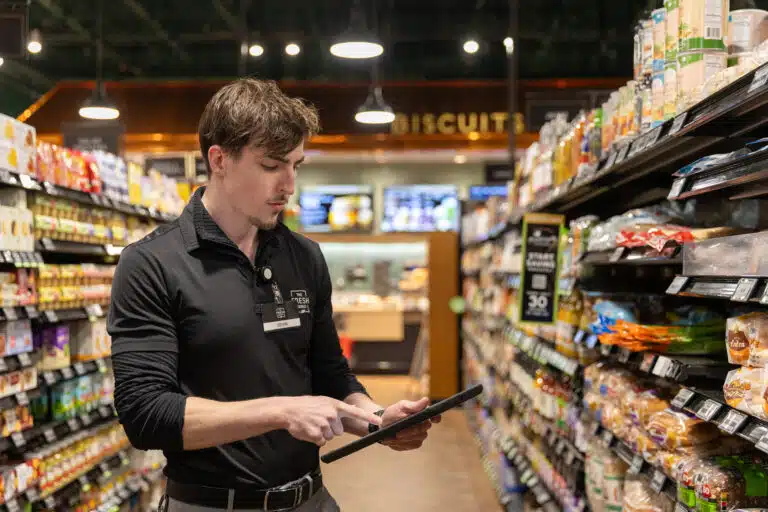
Automation frees store associates from repetitive, low-impact tasks like manual stock checks or paper-based audits. With fewer operational frictions, teams can focus on high-value actions: engaging shoppers, optimizing displays, and executing last-minute holiday activations with speed and consistency.
Holiday Retail Trends 2025: In-Store Experience as a Brand Growth Driver
One of the strongest trends shaping holiday retail this year is the rise of immersive, data-driven in-store experiences that drive brand engagement and sales. Retailers are transforming shelf space into branded engagement zones where gift recommendations, personalized content, and promotions work together to boost business performance.
From Traditional Shelves to Gift-Driven Storytelling Touchpoints
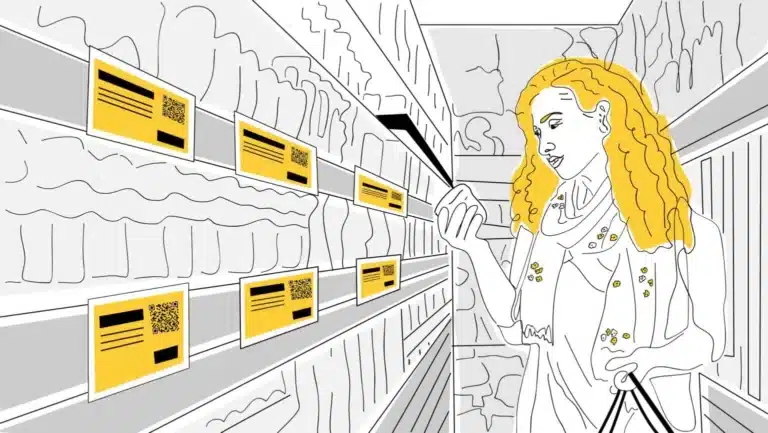
Holiday merchandising is no longer just about product. It is about experience. ESL screens can showcase QR-linked gift guides, recipes, or sustainability stories, turning the shelf into a storytelling platform. Synced with loyalty app data, personalized shelf content ensures customers receive the best promotions at the right moment, improving customer experience and year-end conversion rates.
This creates a frictionless loop of engagement and conversion, meeting shopper expectations for convenience, personalized experiences, and early holiday deals.
Loyalty Data Activation at the Point of Decision
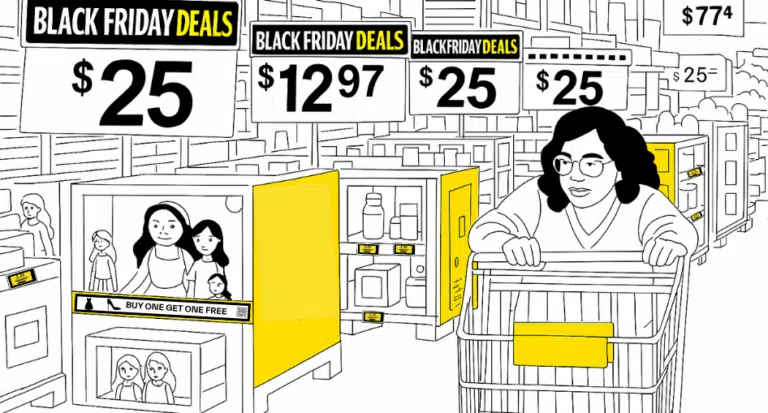
When loyalty data connects directly to shelf-level displays, promotions become personalized in real time. Shoppers see relevant offers tied to their profile, right where decisions happen. This integration turns passive foot traffic into high-intent engagement and strengthens conversion during peak holiday moments.
Explore How Vusion Helps Retailers Digitize Holiday Operations
Finish the Season Strong with ESL Strategy
Retailers entering the 2025 holiday season must treat electronic shelf labels as a central part of their business strategy, from early campaign planning to last-mile execution. ESLs, AI, and IoT amplify human merchandising instincts by delivering faster, more accurate insights, across every product, brand, and customer segment. By combining real-time data with store-specific insights, retailers can build personalized assortments, reinforce product availability, and deliver brand-consistent execution at scale.
In a season defined by speed and choice, retailers who digitize at the shelf will not only meet demand. They will anticipate it.
Take Action: Partner with ESL Experts Now
To fully leverage these innovations, retailers should partner early with technology providers specializing in electronic shelf labels, AI analytics, and IoT solutions. Collaborate with store operations and merchandising leaders to tailor these tools to your unique assortments and customer base. Early deployment ensures readiness before peak season hits.
Contact Vusion’s team of experts to explore how ESLs can transform your holiday strategy and drive loyalty, efficiency, and revenue.