Inventory Optimization in Omnichannel Retail: Turning Complexity into Advantage
Retailers face growing complexity in inventory optimization across supply chains, juggling both physical store operations and digital platforms. Getting inventory wrong means missed sales, higher costs, and frustrated customers. Getting it right? That’s where the competitive edge lies.
What You Need to Know About Inventory Optimization in 2025
- Inventory optimization is now critical for balancing supply and demand across digital and physical channels.
- Stockouts and overstocks erode margins, customer trust, and supply chain efficiency.
- AI, real-time data, and predictive forecasting are redefining how retailers manage inventory levels.
- Unified platforms and visibility across the chain improve service levels, reduce lead times, and cut holding costs.
- Retailers leveraging demand signals and analytics outperform on fill rate, planning accuracy, and customer satisfaction.
Inventory Optimization Is the New Retail Battleground
In a retail world split between digital and physical channels, mastering inventory optimization has become a critical battleground.
Why Traditional Inventory Tactics Are No Longer Enough
Top line: Retailers must now manage inventory across two distinct ecosystems—online demand flows and physical store supply chains. Juggling both is complicated by evolving consumer demands, rapid tech advancements and fierce competition.
Digital and Physical Channels Now Require Unified Stock Strategies
Inventory optimization across online and offline retail is now a defining challenge—and opportunity— for modern fast-moving consumer goods (FMCG) players navigating complex demand patterns. Striking the right balance means keeping shelves stocked, fulfillment centers agile and customers satisfied, all while minimizing costs and avoiding wastage. Success hinges on leveraging cutting-edge technologies: from in-store digitization and sophisticated workforce management to computer vision and advanced data analysis.
The Hidden Cost of Poor Inventory Optimization
Poor inventory practices cost more than money—they erode trust, damage loyalty, and create operational chaos. Understanding where the pain points are is the first step to fixing them.
Stockouts Hurt Sales and Trust—And Still Happen Too Often
Customers want it all. Shoppers expect to buy online and pick up in-store, return anywhere and always find their favorite product in stock. The push for flexibility drives logistics complexity, forcing retailers to adopt omnichannel strategies—or risk losing customers to more nimble competitors.
Omnichannel shoppers spend more: Data shows customers who use multiple channels are more loyal and purchase more overall, making them valuable segments for retailers aiming to boost revenue.
E-commerce’s share is surging: As online shopping becomes the norm, physical retailers must adapt systems to support fast, accurate fulfillment and integrate web and store inventories to compete effectively.
Overstocks Drain Capital, Stockouts Leave Money on the Table
When shoppers can’t find what they want, online or in-store, retailers lose not only the sale but potential future business. Stockouts also hurt brand reputation. To avoid this, retailers need real-time visibility and predictive analytics to anticipate and mitigate disruptions. In 2023, Target’s inability to sync online orders with in-store inventory resulted in frustrated holiday shoppers, highlighting the challenge of siloed systems.
On the flip side, having too much stock is just as risky. Excess goods tie up cash and often end up on clearance, especially if they’re seasonal or expire quickly, which impacts margins. Forecasting needs to account for fluctuating online vs. offline demand, which often varies by geography, season, and consumer trends. For instance, a beauty retailer oversupplied post-pandemic holiday stock based on outdated pre-COVID patterns, leading to excess and profit erosion.
4 Inventory Optimization Moves Retailers Must Deploy Now
To regain control, retailers need to rethink their playbook. These four tactics help transform inventory management from reactive firefighting to proactive strategy.
1. Digitize In-Store Inventory to Enable Real-Time Reactions
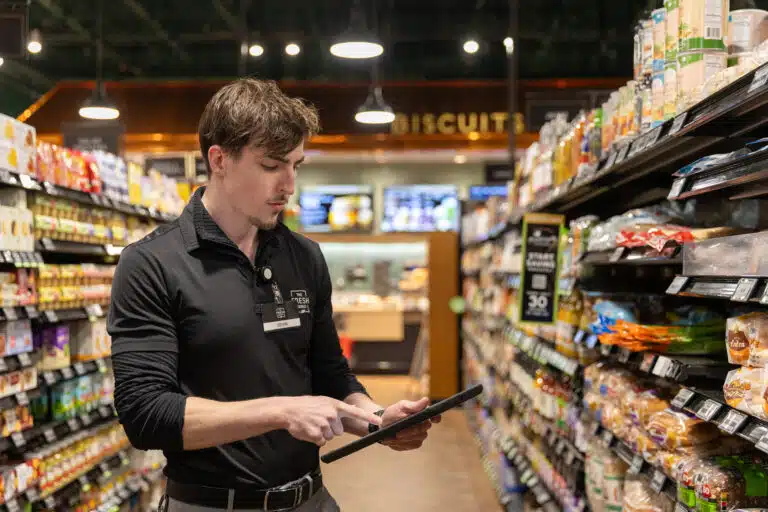
Digitize in-store operations — Technologies like RFID sensors, handheld scanners, and mobile POS systems equip staff to monitor stock instantly, reducing human error and lag. Integrating digital tools streamlines store-level data into a unified dashboard, helping managers react immediately to inventory gaps. As an example, Walmart’s mobile scanner apps replaced paper counts, leading to real-time shelf accuracy and enhanced replenishment speed.
2. Use Smart Workforce Management to Align Labor with Demand
Using workforce management software, retailers can predict labor needs based on sales patterns, automate scheduling, and assign staff to high-demand tasks (e.g., online order picking or helping in peak aisles). In today’s hybrid environment, staff roles shift between digital fulfillment and classic customer service, requiring flexible, data-driven scheduling. One leading apparel chain dynamically redeployed associates throughout the day, following digital cues like Buy Online, Pick Up In Store, demand spikes, keeping labor efficient and customers happy.
3. Implement Computer Vision to Prevent On-Shelf Availability Gaps
Supercharge shelves with computer vision – Camera systems, AI, and sensors scan shelves constantly, flag empty spaces or misplaced items, enabling staff to restock preemptively. Computer vision streamlines manual processes, delivers actionable insights, and generates real-time alerts, reducing overlooked items and optimizing shelf impact. Kroger’s camera-outfitted aisles help staff react before stockouts occur, improving sales, shopper satisfaction and operational efficiency.
4. Let AI and Analytics Predict What to Stock, Where, and When
Let data analytics drive decisions. Advanced analytics process millions of data points—from in-store traffic and online browsing to historical buying patterns, to forecast future demand and optimize orders. AI and predictive analytics empower retailers to make informed choices, avoiding both overstock and shortages in an environment where trends can shift overnight. A great example is that Sephora’s AI-augmented forecasting kept best-selling products on shelves even during viral TikTok moments, minimizing lost sales and disappointing customers.
The Business Case: What Inventory Optimization Delivers
Inventory optimization isn’t just operational, it’s financial. The numbers are clear: the right moves pay off in margin, accuracy, and long-term growth.
Lower Stockouts, Fewer Errors, and Smarter Allocation
Stats show the upside: AI-powered inventory cuts stockouts by 20–50%, slashes costs by up to 30%. These savings free up capital for growth and marketing, while keeping customers coming back (VusionGroup, 2025).
Higher Margins and Improved Forecasting Accuracy
North America’s analytics market hit $8.5B in 2025, aiming for $40B by 2033. Retailers recognize the value of data, fueling a boom in tech investments for smarter decision-making (IHL Group, 2023).
Personalization tech boosts order value 40%, customer lifetime by 20%. Tailoring offers to shopper behavior encourages larger baskets and deeper brand loyalty (TechBullion, 2024).
Lessons from the Field: Inventory Optimization in Action
What happens when retailers get it right? Real-world examples show how agile, data-powered approaches drive measurable results.
Just-in-Time Restocking Improves Agility and Cash Flow
Retailers using demand-driven restocking minimize excess while ensuring hot products are always available—meaning less cash tied up and more responsive merchandising. Just-in-time ordering bolsters cash flow and agility, helping retailers adapt to sudden spikes or drops in demand.
Sharing Data with Suppliers Enhances Fulfillment Accuracy
Retailers sharing live data with suppliers see more accurate deliveries and less overstock; agility increases and operational headaches decrease. Strong supplier partnerships foster trust, transparency, and mutual success, especially during unpredictable market swings.
VusionGroup’s Real-Time Inventory Optimization Tools
VusionGroup provides retailers with the connected technologies needed to orchestrate inventory across every touchpoint. Here’s how.
Captana: Computer Vision for Shelf Accuracy and Alerts
Captana equips retailers with real-time shelf-level visibility through embedded cameras and AI. By constantly scanning shelves, Captana identifies stockouts, misplaced products, and planogram compliance issues—triggering alerts that allow staff to react immediately. This automation eliminates blind spots in inventory management, reduces manual audits, and increases on-shelf availability. Retailers using Captana have reported up to 7% gains in product availability and significant time savings on restocking operations (Source: VusionGroup internal data).
Memory: AI-Powered Forecasting and Store Execution
Memory centralizes retail data to empower AI-driven decisions across assortment planning, forecasting, and store execution. By connecting HQ strategies with real-time field data, Memory enables localized inventory adjustments based on actual demand. It supports predictive analytics that anticipate sales trends, automates task management in-store, and improves compliance with merchandising plans. With Memory, retailers reduce the time spent on planning by up to 50% and boost sales through higher planogram accuracy and smarter stock allocation (Source: VusionGroup internal benchmarks).
From Silos to Synchronization: One View Across All Channels
Inventory optimization fails when store, e-commerce, and supply chain systems operate in silos. VusionGroup’s platform connects these data streams into a unified view, merging shelf-level insights from Captana, operational signals from store teams, and predictive models via Memory. This synchronization ensures consistency between what’s promised online and what’s available in-store. Retailers can align fulfillment, pricing, and replenishment strategies in real time, enabling seamless omnichannel execution and eliminating costly mismatches across channels.
The bottom line for retail leaders: Digital-first, omnichannel thinking is table stakes for inventory success. Unified systems, flexible labor, and smart tech, from computer vision to robust analytics, turn complexity into competitive advantage. The right moves not only prevent costly missteps but set up retailers for outsized growth in an unforgiving market.
Sources
IHL Group. (2023). $1.7 Trillion Reasons to Be Smart About Inventory Distortion. https://www.ihlservices.com/news/1-7-trillion-reasons-to-be-smart-about-inventory-distchBullion. (2024). Hyper-personalization in retail: Leveraging data science and real-time streaming. https://techbullion.com/hyper-personalization-in-retail-leveraging-data-science-and-real-time-streamnGroup. (2025, September 3). Win the shelf with AI-powered digital merchandising. https://www.vusion.com/na/insightsred-digital-merchandising
TechBullion. (2024). Hyper-personalization in retail: Leveraging data science and real-time streaming. Retrieved from https://techbullion.com/hyper-personalization-in-retail-leveraging-data-science-and-real-time-streaming/
VusionGroup. (2025, September 3). Win the shelf with AI-powered digital merchandising. https://www.vusion.com/na/insights/win-the-shelf-with-ai-powered-digital-merchandising